

Products
Products
Contact Us
- 24-hour online service
- Own factory processing
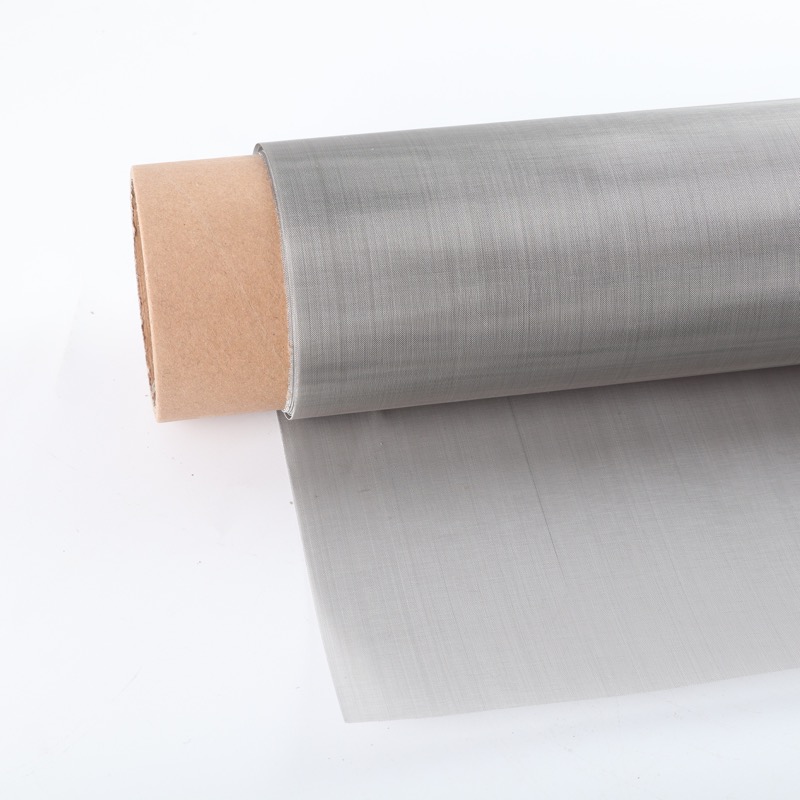
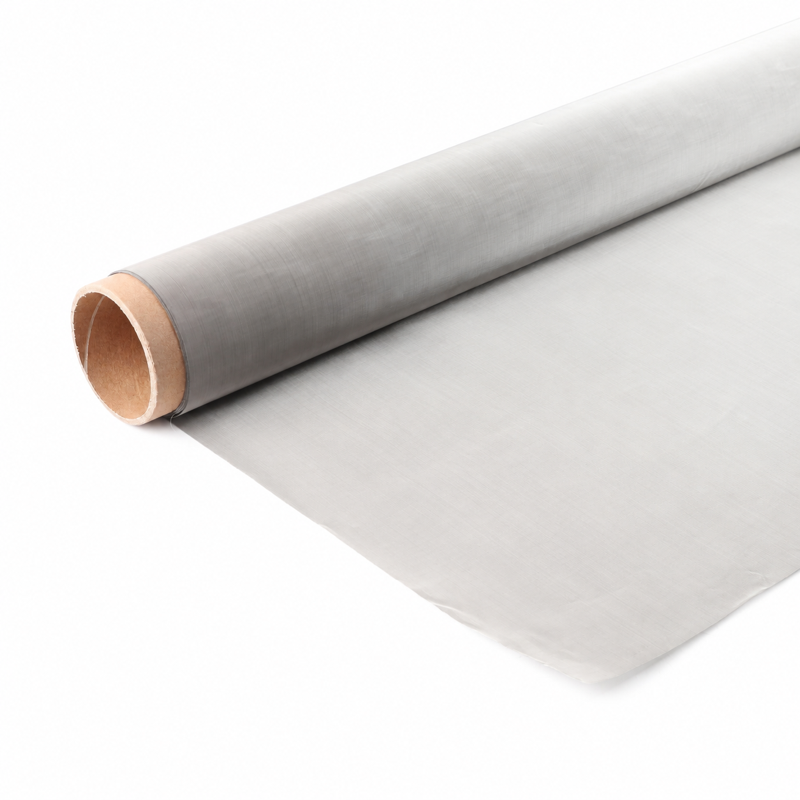
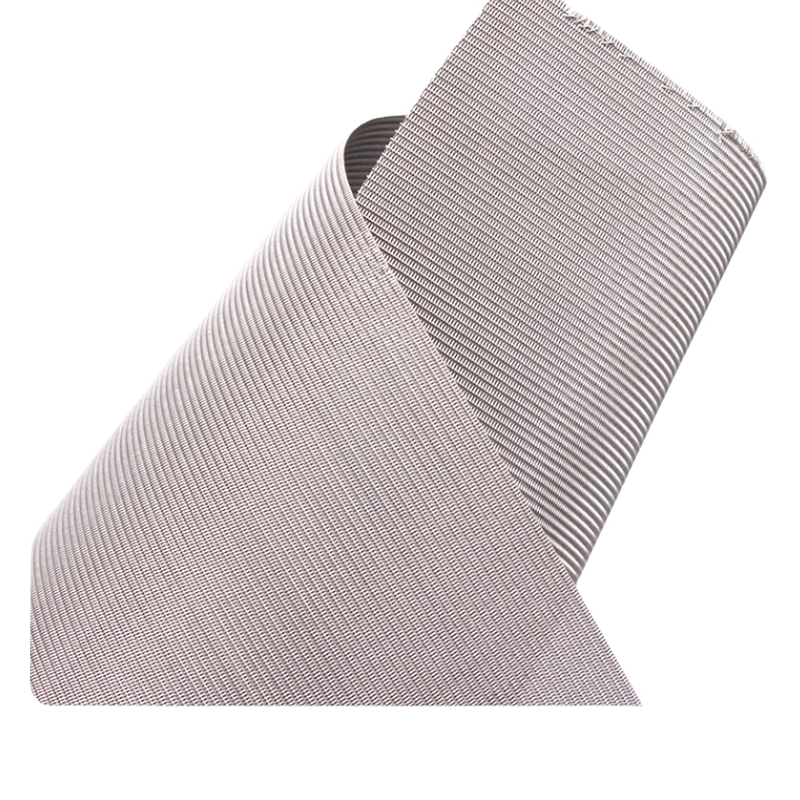
Stainless Steel Filter Mesh
Stainless steel filter mesh in plain weave, twill weave and Dutch weave constructions. Available in SS 304, 304L, 316 and 316L for industrial liquid, gas, powder, polymer and hydraulic filtration. Custom rolls, cut pieces and fabricated filter components are available.
Specify your filtration requirement: send the target particle size or micron rating, medium, dimensions and quantity.
product details
Stainless steel filter mesh is a versatile woven wire filtration material supplied in plain weave, twill weave and Dutch weave constructions. By selecting the appropriate weave, mesh count and wire diameter, buyers can balance flow rate, particle retention, strength and service life for industrial filtration and separation applications.
Anping County Dongce Wire Mesh Products Co., Ltd. manufactures stainless steel filter mesh in SS 304, 304L, 316 and 316L. Rolls, cut pieces, strips and custom-fabricated filter components are available for different equipment and operating conditions.
Three Stainless Steel Filter Mesh Types
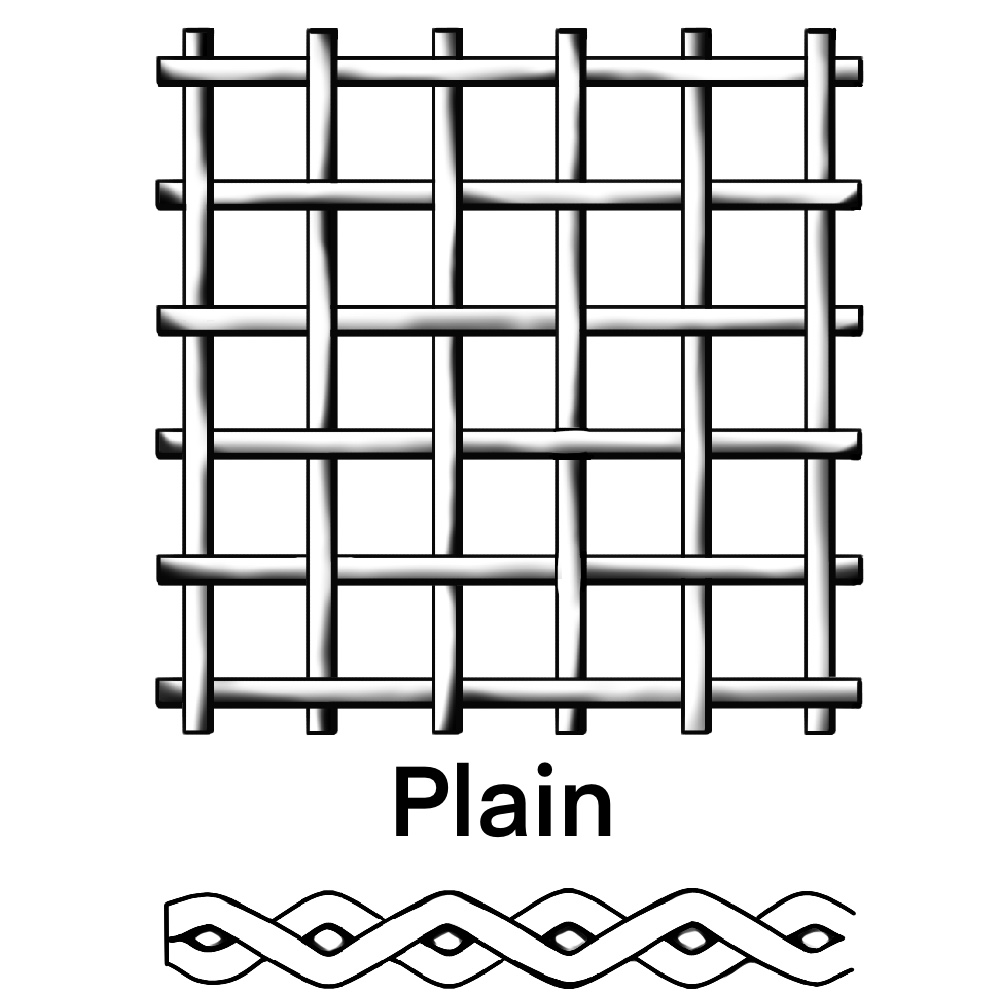
Plain Weave Stainless Steel Wire Mesh
Each warp wire passes alternately over and under each weft wire. This stable, square-opening construction offers accurate apertures, good flow and easy cleaning. It is a practical choice for screening, sieving and general-purpose filtration. Our normal range is from 1 to 400 mesh.
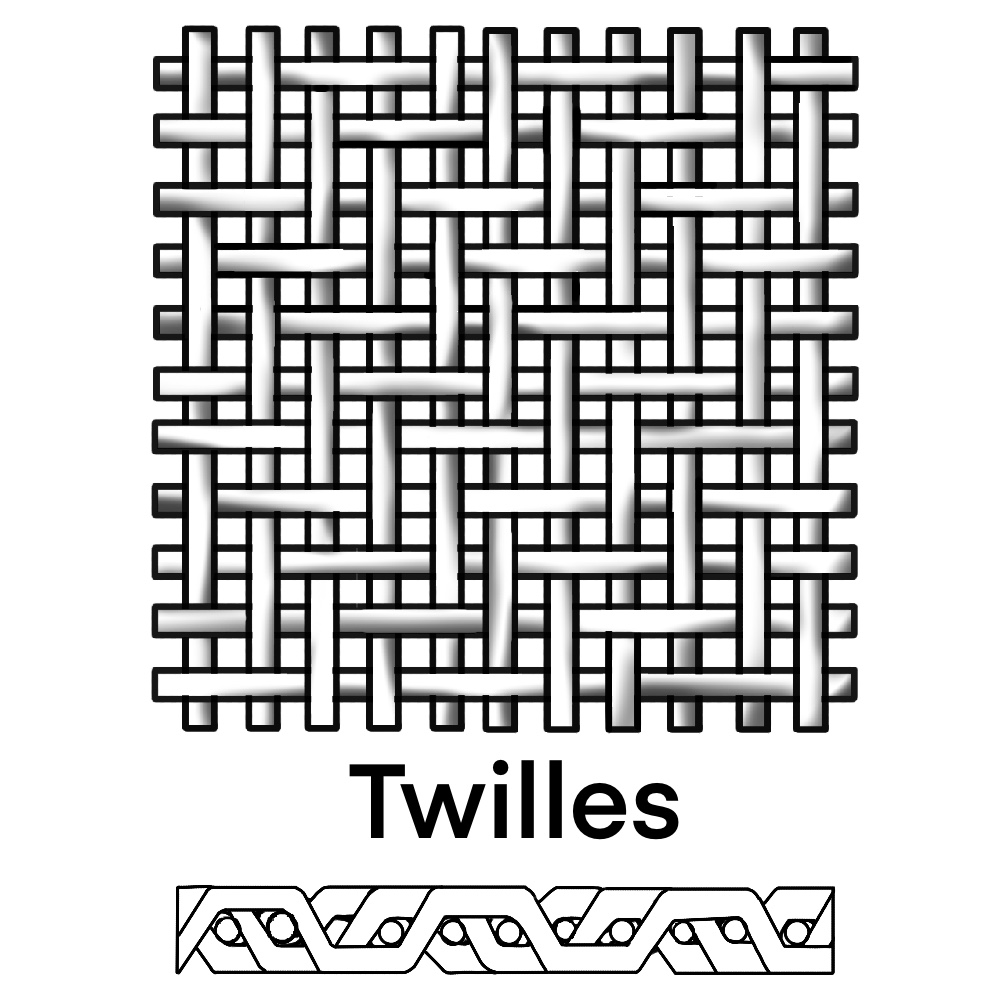
Twill Weave Stainless Steel Wire Mesh
Each wire passes over two and under two adjacent wires. Twill weave uses an offset 2/2 construction that can accommodate different wire-to-opening combinations at fine mesh counts. It is suitable for fine screening and filtration when opening size, flow, mechanical support and operating conditions are confirmed. Available mesh counts extend to 635 mesh, including 450, 500, 600 and 635 mesh.
Dutch Weave Stainless Steel Wire Mesh
Dutch weave uses different warp and weft wire diameters and mesh counts to form a compact filter cloth. Its tortuous pore path supports fine particle retention. Retention performance and allowable differential pressure depend on the specified construction, test criteria and support assembly. It is widely selected for polymer, oil, chemical and hydraulic filtration. Fine constructions are available up to 500 × 3500 mesh.
Weave Selection Guide
| Filter Mesh Type | Weave Structure | Mesh Range | Standard Roll Width | Filtration Character | Typical Applications |
|---|---|---|---|---|---|
| Plain Weave | One wire over, one wire under | 1–400 mesh | 1–3 m | Square opening, balanced flow and retention | Screening, sieving, ventilation and general filtration |
| Twill Weave | Two wires over, two wires under | 20–635 mesh | 1–3 m | Fine openings with improved weaving stability | Fine powder, liquid, gas and pressure filtration |
| Dutch Weave | Different warp and weft counts with tightly packed wires | Up to 500 × 3500 mesh | 1–1.6 m; common: 1, 1.2 and 1.5 m | Dense filtration path; retention rating and support requirements to be confirmed | Polymer, oil, chemical, hydraulic and extrusion filtration |
Representative Specifications
The following values are representative selections. Other combinations can be manufactured according to the required filtration rating and operating conditions.
| Weave | Mesh Count | Wire Diameter (mm) | Wire Diameter (inch) | Opening Size (mm) | Opening Size (inch) |
|---|---|---|---|---|---|
| Plain | 20 | 0.400 | 0.01575 | 0.870 | 0.03425 |
| Plain | 100 | 0.102 | 0.00402 | 0.152 | 0.00598 |
| Plain | 400 | 0.025 | 0.00098 | 0.039 | 0.00154 |
| Twill | 200 | 0.053 | 0.00209 | 0.074 | 0.00291 |
| Twill | 400 | 0.025 | 0.00098 | 0.039 | 0.00154 |
| Twill | 635 | 0.015 | 0.00059 | 0.025 | 0.00098 |
Note: Dutch weave filtration is normally specified by warp × weft mesh, wire diameters and micron rating rather than a simple square opening.
Mesh Count, Micron Size and Filtration Rating
For square-opening plain and twill weave, clear opening is estimated as 25.4 ÷ mesh count − wire diameter (mm). Multiply the result by 1,000 to express it in microns. For example, 100 mesh with 0.102 mm wire has an approximate opening of 152 microns. The same mesh count with another wire diameter produces a different opening.
A geometric opening is not a tested nominal or absolute filtration rating. Particle shape, flow, pressure, tolerances and filter assembly affect actual retention. Dutch weave does not have regular square apertures and cannot be rated using this opening formula. Specify the required retention efficiency and test method for critical filtration.
How to Select Stainless Steel Filter Mesh
- Define retention: identify the particles to remove and the required micron rating or clear opening.
- Define process conditions: provide the medium, viscosity, flow rate, operating temperature and maximum differential pressure.
- Select material: confirm compatibility with both the process medium and cleaning chemicals.
- Select construction: compare square-opening plain or twill mesh with dense Dutch weave filter cloth.
- Confirm installation: specify dimensions, support layers, edge treatment and fabrication requirements.
Material Grades
- SS 304 / 304L: economical corrosion resistance for general industrial, food and water filtration.
- SS 316 / 316L: improved resistance to chlorides, chemicals and demanding process environments.
Standard Roll Widths
Plain and twill weave rolls are commonly supplied in 1 m, 1.2 m, 1.3 m, 1.5 m, 1.6 m, 1.8 m, 2 m, 2.2 m, 2.5 m, 2.8 m and 3 m widths. Dutch weave is available from 1 to 1.6 m, with 1 m, 1.2 m and 1.5 m as common widths. Custom roll lengths, slit widths and cut sizes are available on request.
Key Advantages
- Three weave constructions for coarse, fine and precision filtration
- Material and wire dimensions selected for the operating medium, temperature and wear conditions
- Stable openings and consistent filtration performance
- Cleaning and reuse possible where the alloy, retained material and assembly permit; inspect mesh condition before reuse
- Available as rolls, sheets, strips, discs, cylinders and custom components
- Mesh count, wire diameter, width and edge treatment can be customized
Typical Applications
- Oil, fuel, hydraulic fluid and lubricant filtration
- Chemical, pharmaceutical and food processing
- Polymer melt filtration and plastic extrusion screens
- Gas, air and ventilation filtration
- Powder screening and particle-size classification
- Water treatment and industrial liquid filtration
- Mining process-fluid filtration and fine-particle separation
- Electronics and printing equipment applications subject to opening and dimensional requirements
- Aerospace filter components assessed against customer drawings and qualification requirements
- Filter cartridges, strainers, baskets and filter discs
Forms and Further Processing
Stainless steel filter mesh can be supplied in full rolls or processed into cut sheets, narrow strips, round discs, stamped parts, welded cylinders, filter baskets and multilayer filter packs. Edges can be plain, trimmed or reinforced according to installation requirements.
Quality Control
Mesh count, wire diameter, roll width, weave consistency and surface condition are inspected during production. For fine and Dutch weave filter cloth, filtration requirements should be confirmed by the target particle size or micron rating, working pressure, temperature and medium.
Industrial Bulk Supply and Custom Filter Components
We serve industrial equipment manufacturers, OEM buyers, distributors and project procurement teams. We focus on industrial bulk supply and custom manufacturing; individual household and small retail purchases are not accepted. Minimum production quantities and availability are confirmed for each specification.
For finished parts, explore custom filter screens and stainless steel filter cylinders. Provide a drawing with dimensions, layer arrangement, edge or flange details, tolerances and quantity for evaluation. Support layers and housings must be considered for pressure service.
How to Request a Quotation
Please provide the weave type, stainless steel grade, mesh count or micron rating, wire diameter, roll width and length, required quantity and intended application. If the specification is not yet fixed, tell us the filtration medium, target particle size and working conditions, and our team will recommend a suitable construction.
Frequently Asked Questions
Which weave should I choose?
Choose plain weave for an over-one, under-one square-opening construction, twill weave for an offset 2/2 construction at fine mesh counts, or Dutch weave for a dense filtration path. Compare retention, flow, wire diameter, support and cleaning requirements rather than assuming that one weave is always stronger or more accurate.
Can you supply custom sizes?
Yes. We supply standard rolls as well as cut pieces, slit rolls, discs, cylinders and fabricated filter elements.
Does mesh count alone tell me the filtration precision?
No. Square-opening mesh requires both mesh count and wire diameter. Dutch weave requires warp and weft counts, both wire diameters, weave type and an agreed rating basis. A micron figure should state whether it describes a geometric opening, pore-size measurement or tested particle-retention rating.
Can the mesh be cleaned and reused?
Where the material and filter design permit, suitable cleaning can allow reuse. Confirm compatibility with the cleaning chemicals and temperature, inspect for damage and blocked pores, and validate performance before returning the filter to service.
Can I request samples?
Yes. Sample availability depends on the required grade, weave and specification. Contact us with your filtration requirements for confirmation.
Contact Anping County Dongce Wire Mesh Products Co., Ltd. for stainless steel filter mesh specifications, samples and a factory quotation.
Compare Woven Filter Mesh Constructions
View detailed specifications for plain weave wire mesh, twill weave wire mesh and Dutch weave filter cloth.
Send your filter mesh requirements for a quotation
Browse the full woven stainless steel wire mesh range for construction-specific specifications.