

Products
Products
Contact Us
- 24-hour online service
- Own factory processing
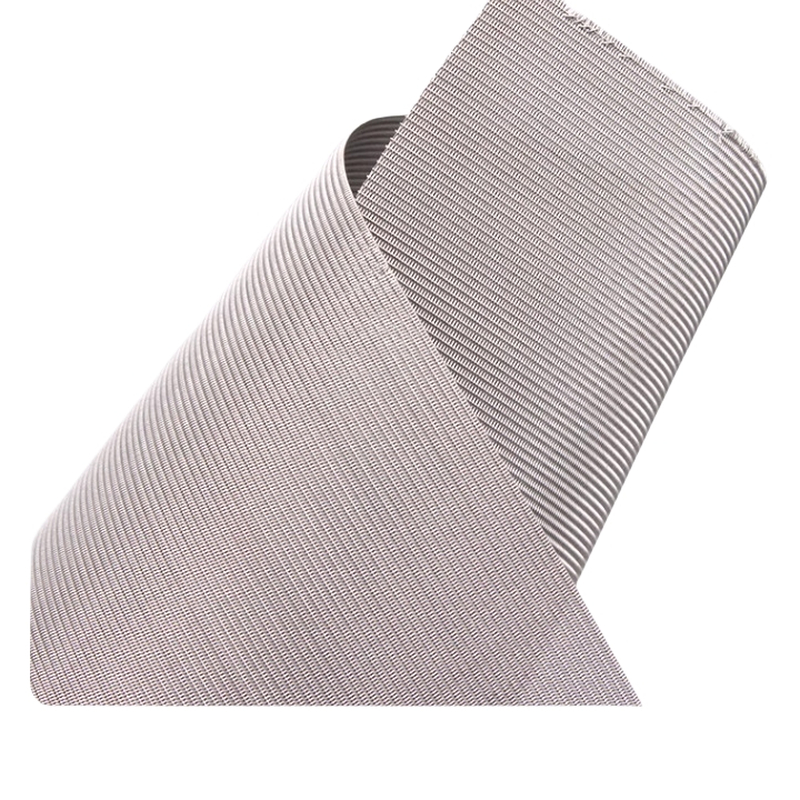
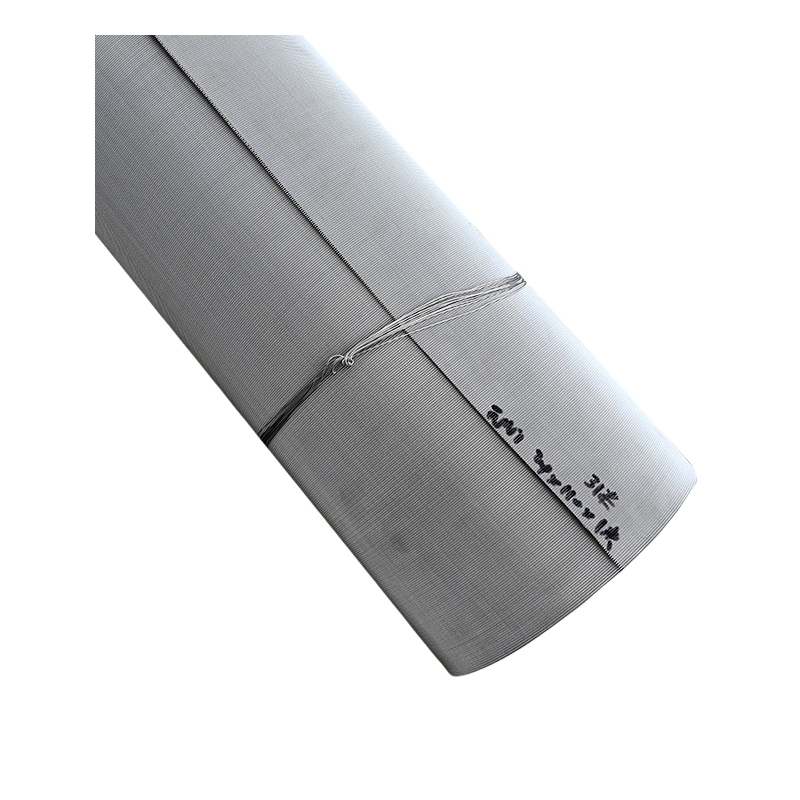
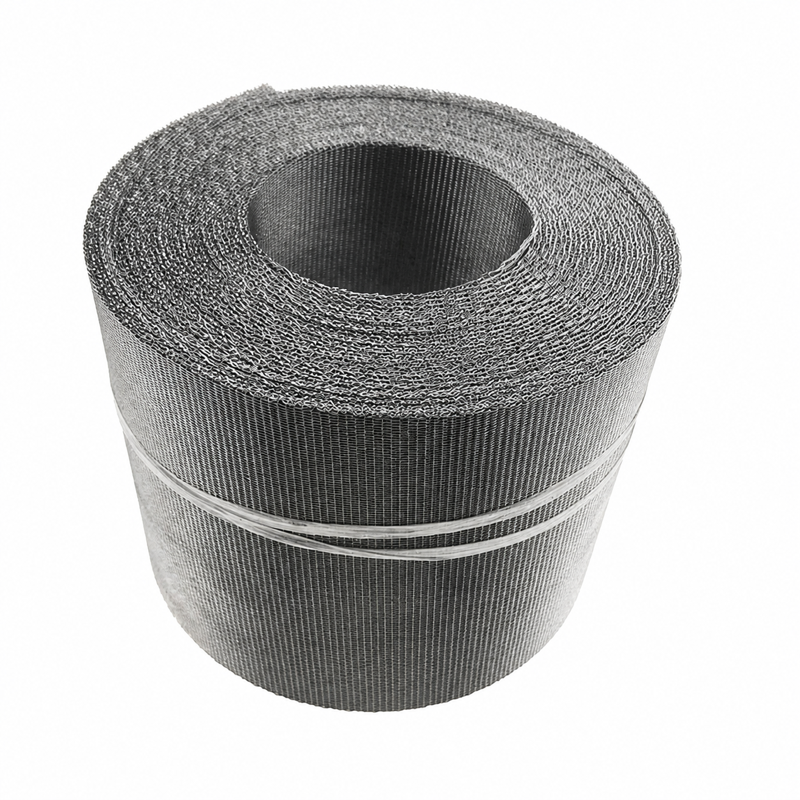
Stainless Steel Dutch Weave Wire Mesh
Dense stainless steel filter cloth with different warp and weft mesh counts for precision filtration and demanding industrial processes. Available in plain Dutch, twill Dutch and reverse Dutch weave using AISI 304, 304L, 316 and 316L.
For specification matching: send your target micron rating, filtration medium, operating conditions, dimensions and quantity.
product details
Stainless Steel Dutch Weave Wire Mesh for Industrial Filtration
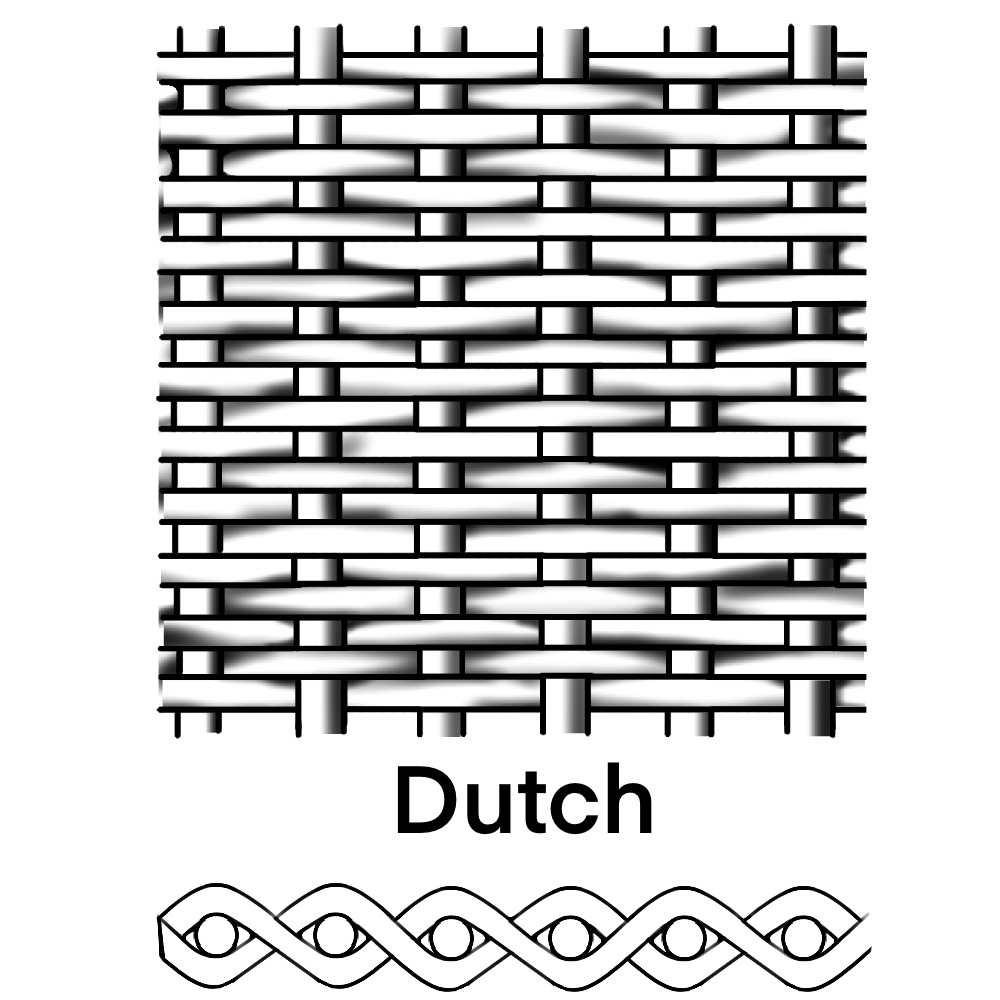
Stainless steel Dutch weave wire mesh is a precision woven filter medium made with different mesh counts and wire diameters in the warp and weft directions. In conventional plain Dutch and twill Dutch constructions, heavier warp wires provide structural support while closely packed finer weft wires create a dense, tortuous filtration path. Reverse Dutch weave uses a different warp-to-weft arrangement.
Unlike square opening wire mesh, Dutch weave mesh does not have regular visible square apertures. Filtration performance is therefore specified by weave construction, warp × weft mesh count, wire diameter and tested micron rating rather than by a simple opening calculation.
Anping County Dongce Wire Mesh Products Co., Ltd. supplies stainless steel Dutch weave mesh in AISI 304, 304L, 316 and 316L for industrial filtration, polymer processing, chemical production and filter element fabrication.
Key Features
- Dense woven structure for fine and consistent particle retention
- Strong warp wires provide good mechanical support
- Particle retention and dirt-holding performance selected for the specified weave and operating conditions
- Good resistance to corrosion, heat and chemical exposure
- Suitable for engineered filter assemblies when support, pressure differential and material compatibility are confirmed
- Can be cut, formed, welded and fabricated into filter components
- Available as rolls, strips, sheets and custom-cut pieces
Dutch Weave Structures
Plain Dutch Weave
Each weft wire passes alternately over and under each warp wire. The closely packed weft wires form a strong and stable filter cloth with fine particle retention.
Twill Dutch Weave
Each weft wire passes over two and under two warp wires. This construction allows a denser arrangement of fine wires and can provide finer filtration with good strength.
Reverse Dutch Weave
The warp direction contains a higher mesh count of finer wires, while the weft direction uses fewer and heavier wires. It is commonly used for continuous screen changers, plastic extrusion and high-pressure filtration.
Available Stainless Steel Grades
AISI 304 / 304L
Suitable for general industrial filtration, food processing and applications requiring good corrosion resistance and formability.
AISI 316 / 316L
Contains molybdenum for improved resistance to chlorides and chemical environments. These grades are widely selected for demanding liquid filtration and welded filter components.
Typical Specifications
| Item | Available Options |
|---|---|
| Product Name | Stainless Steel Dutch Weave Wire Mesh |
| Weave Types | Plain Dutch weave, twill Dutch weave and reverse Dutch weave |
| Material Grades | AISI 304, 304L, 316 and 316L |
| Mesh Construction | Different warp and weft mesh counts, with fine Dutch weave constructions available up to 500 × 3500 Mesh |
| Opening Structure | Dense filtration path without regular square openings |
| Standard Roll Width | 1–1.6 m; common widths are 1 m, 1.2 m and 1.5 m |
| Roll Length | 30 m or customized |
| Supply Form | Full rolls, slit rolls, sheets, strips and cut pieces |
| Edge Type | Natural edge, trimmed edge or custom edge treatment |
Understanding Dutch Weave Mesh Count and Micron Rating
A specification such as 40 × 200 describes the warp and weft counts per linear inch, not a 40 or 200 micron filter. Specify both counts, both wire diameters and the weave type when matching an existing filter cloth. The square-opening formula used for plain and twill square mesh does not establish a Dutch weave filtration rating.
A nominal rating describes retention under a stated test and efficiency criterion. An absolute rating must also be accompanied by its test method and acceptance criterion. These terms are not interchangeable, and a pore-size value alone does not certify either rating. For critical filtration, agree the test method, particle-retention requirement and documentation before ordering.
The micron figures in the tables below are reference pore-size values for the listed constructions. Confirm the measurement basis and batch specification with us; do not treat these figures as guaranteed removal efficiencies or as a universal mesh-to-micron conversion chart.
Plain Dutch Weave Filter Mesh Specifications
Common production specifications for plain Dutch weave stainless steel filter mesh.
| Filter No. | Mesh Count (Warp × Weft) | Wire Diameter (mm, Warp × Weft) | Wire Diameter (inch, Warp × Weft) | Pore Size (μm) | Weight (kg/m²) |
|---|---|---|---|---|---|
| 32# | 8 × 62 | 0.63 × 0.45 | 0.02480 × 0.01772 | 300 | 5.42 |
| 40# | 10 × 79 | 0.5 × 0.355 | 0.01969 × 0.01398 | 250 | 3.16 |
| 48# | 12 × 64 | 0.58 × 0.4 | 0.02283 × 0.01575 | 280 | 2.9 |
| 55# | 14 × 88 | 0.4 × 0.3 | 0.01575 × 0.01181 | 180 | 2.54 |
| 76# | 19 × 140 | 0.315 × 0.2 | 0.01240 × 0.00787 | 140 | 1.88 |
| 80# | 20 × 300 | 0.35 × 0.2 | 0.01378 × 0.00787 | — | 3.6 |
| 95# | 24 × 110 | 0.355 × 0.25 | 0.01398 × 0.00984 | 120 | 2.45 |
| 100# | 25 × 140 | 0.28 × 0.2 | 0.01102 × 0.00787 | 100 | 1.95 |
| 120# | 30 × 150 | 0.25 × 0.18 | 0.00984 × 0.00709 | 80 | 1.68 |
| 140# | 35 × 175 | 0.224 × 0.16 | 0.00882 × 0.00630 | 71 | 1.52 |
| 160# | 40 × 200 | 0.2 × 0.14 | 0.00787 × 0.00551 | 60 | 1.40 |
| 180# | 45 × 250 | 0.16 × 0.112 | 0.00630 × 0.00441 | 56 | 1.09 |
| 200# | 50 × 250 | 0.14 × 0.11 | 0.00551 × 0.00433 | 53 | 1.04 |
| 220# | 55.5 × 280 | 0.14 × 0.1 | 0.00551 × 0.00394 | 50 | 0.92 |
| 240# | 65 × 330 | 0.11 × 0.08 | 0.00433 × 0.00315 | 36 | 0.71 |
| 280# (1) | 70 × 350 | 0.11 × 0.08 | 0.00433 × 0.00315 | 35 | 0.72 |
| 280# (2) | 70 × 385 | 0.11 × 0.07 | 0.00433 × 0.00276 | 32 | 0.75 |
| 300# | 78 × 700 | 0.11 × 0.08 | 0.00433 × 0.00315 | 30 | 1.39 |
| 315# (1) | 80 × 400 | 0.1 × 0.065 | 0.00394 × 0.00256 | 40 | 0.62 |
| 315# (2) | 80 × 600 | 0.1 × 0.06 | 0.00394 × 0.00236 | — | 0.74 |
| 315# (3) | 80 × 800 | 0.15 × 0.04 | 0.00591 × 0.00157 | — | 0.77 |
| 320# | 81 × 780 | 0.1 × 0.07 | 0.00394 × 0.00276 | 30 | 1.22 |
| 354# | 90 × 550 | 0.12 × 0.05 | 0.00472 × 0.00197 | — | 0.667 |
Pore size and weight are reference specification values to confirm before ordering. Pore size is not a certified nominal or absolute retention rating. A dash means no pore-size value is listed; request confirmation for the required construction and production batch.
Twill Dutch Weave Filter Mesh Specifications
Common production specifications for fine twill Dutch weave stainless steel filter mesh. The product range extends to fine constructions with up to 3500 Mesh in the weft direction.
| Filter No. | Mesh Count (Warp × Weft) | Wire Diameter (mm, Warp × Weft) | Wire Diameter (inch, Warp × Weft) | Pore Size (μm) | Weight (kg/m²) |
|---|---|---|---|---|---|
| 360# | 91 × 787 | 0.1 × 0.07 | 0.00394 × 0.00276 | 25 | 1.24 |
| 400# | 101 × 900 | 0.1 × 0.063 | 0.00394 × 0.00248 | 20 | 1.22 |
| 472# | 120 × 400 | 0.1 × 0.075 | 0.00394 × 0.00295 | — | 0.862 |
| 500# | 127 × 1100 | 0.07 × 0.05 | 0.00276 × 0.00197 | 17 | 0.81 |
| 630# | 160 × 1500 | 0.063 × 0.04 | 0.00248 × 0.00157 | 15 | 0.62 |
| 650# (1) | 165 × 400 | 0.071 × 0.06 | 0.00280 × 0.00236 | — | 0.56 |
| 650# (2) | 165 × 600 | 0.071 × 0.05 | 0.00280 × 0.00197 | — | 0.575 |
| 650# (3) | 165 × 800 | 0.071 × 0.05 | 0.00280 × 0.00197 | 25 | 0.7 |
| 650# (4) | 165 × 1100 | 0.071 × 0.045 | 0.00280 × 0.00177 | — | 0.756 |
| 650# (5) | 165 × 1400 | 0.071 × 0.04 | 0.00280 × 0.00157 | 16 | 0.76 |
| 685# | 174 × 1700 | 0.063 × 0.032 | 0.00248 × 0.00126 | 13 | 0.61 |
| 787# (1) | 200 × 600 | 0.071 × 0.06 | 0.00280 × 0.00236 | — | 0.792 |
| 787# (2) | 200 × 800 | 0.071 × 0.06 | 0.00280 × 0.00236 | — | 0.972 |
| 787# (3) | 200 × 1400 | 0.071 × 0.04 | 0.00280 × 0.00157 | 12 | 0.8 |
| 795# | 202 × 1760 | 0.05 × 0.032 | 0.00197 × 0.00126 | 10 | 0.6 |
| 850# | 216 × 1860 | 0.045 × 0.03 | 0.00177 × 0.00118 | 9 | 0.518 |
| 1000# | 254 × 2000 | 0.04 × 0.028 | 0.00157 × 0.00110 | 8 | 0.5 |
| 1125# | 285 × 2235 | 0.036 × 0.025 | 0.00142 × 0.00098 | 7 | 0.439 |
| 1228# | 312 × 2100 | 0.035 × 0.025 | 0.00138 × 0.00098 | — | 0.423 |
| 1250# | 318 × 2235 | 0.036 × 0.025 | 0.00142 × 0.00098 | — | 0.449 |
| 1280# | 325 × 2300 | 0.035 × 0.025 | 0.00138 × 0.00098 | 5 | 0.45 |
| 1575# | 400 × 3100 | 0.035 × 0.019 | 0.00138 × 0.00075 | 3 | 0.369 |
Pore size and weight are reference specification values to confirm before ordering. Pore size is not a certified nominal or absolute retention rating. A dash means no pore-size value is listed; request confirmation for the required construction and production batch.
Common Applications
- Polymer and plastic processing: screen packs, extruder screens and melt filtration
- Oil and fuel filtration: hydraulic oil, lubricants and process fluids
- Chemical processing: catalyst recovery, clarification and solid-liquid separation
- Food and beverage: process filtration and clarification equipment
- Pharmaceutical production: precision filtration and equipment protection
- Aerospace and automotive: fuel, hydraulic and process filter components
- Industrial filter manufacturing: filter discs, cartridges, candles and pressure leaves
Product Forms and Further Processing
- Standard and custom-width rolls
- Slit rolls and narrow strips
- Flat sheets and cut-to-size pieces
- Round and custom-shaped filter discs
- Filter cylinders, cartridges and screen packs
- Multi-layer welded and sintered filter assemblies
Quality Control
Inspection can cover stainless steel grade, warp and weft mesh count, warp and weft wire diameter, cloth thickness, roll dimensions, weaving condition and filtration rating. Required test methods and documentation should be confirmed before production.
Packaging
Dutch weave mesh rolls are protected against deformation, contamination and moisture. Fine mesh can be wound on a rigid core and packed with protective paper, plastic film, cartons, wooden cases or pallets according to the specification and shipping method.
Selecting Dutch Weave Filter Cloth for Your Process
Start with the required particle retention and acceptable pressure drop. Then specify the fluid or gas, viscosity, flow rate, temperature, operating pressure and maximum differential pressure. Select the alloy for the operating medium and cleaning chemicals, and confirm whether the mesh needs a support layer or a fabricated housing.
For chemical processing, food machinery, mining process-fluid filtration, electronics manufacturing and aerospace equipment, include your drawing, cleanliness requirements and any required inspection or qualification documents. Material grade alone does not establish suitability or certification for these applications.
Information Required for a Quotation
- Required Dutch weave type
- Warp × weft mesh count
- Warp × weft wire diameter
- Required micron rating or retained particle size
- Stainless steel grade
- Roll width and length, or finished component dimensions
- Required quantity
- Application, pressure, temperature and chemical conditions
- Packaging, inspection and documentation requirements
Frequently Asked Questions
Why does Dutch weave mesh not have a simple opening size?
The weft wires are packed closely together, so the filtration path is formed between multiple wire layers rather than by regular square apertures. A micron rating or tested retention value is therefore more meaningful.
What is the difference between plain Dutch and twill Dutch weave?
Plain Dutch weave uses an over-one and under-one pattern. Twill Dutch weave uses an over-two and under-two pattern, allowing a denser construction and often finer filtration.
How do I select the correct Dutch weave specification?
Provide the required particle retention, flow rate, pressure, temperature, fluid and corrosion conditions. Our team can compare suitable weave constructions and materials.
Can Dutch weave mesh be fabricated into finished filters?
Yes. It can be cut, formed, welded and assembled into discs, cylinders, cartridges, screen packs and multi-layer filter components.
Can I convert Dutch weave mesh count directly into microns?
No. Retention depends on the weave, warp and weft wire diameters and the measurement method. Send the complete construction or an existing filter specification so we can review a suitable replacement.
Do you supply industrial bulk and OEM orders?
Yes. We serve industrial equipment manufacturers, OEM buyers, distributors and project procurement teams. We focus on industrial bulk supply and custom manufacturing; individual household and small retail purchases are not accepted. Order quantities and production availability are confirmed for each construction.
Request an Industrial Dutch Weave Filter Mesh Quote
Send your weave specification, material grade, required micron rating and test criterion, dimensions and quantity to Anping County Dongce Wire Mesh Products Co., Ltd. Include the filtration medium, flow rate, operating temperature, differential pressure and drawing where available. We will review your industrial requirement and prepare a quotation.
Send your Dutch weave filter requirements
Related Filtration Products and Guides
Compare stainless steel filter mesh constructions or explore square-opening twill weave mesh. Read our guide to Dutch weave mesh count and micron rating when preparing your specification.
Browse the woven stainless steel wire mesh range. For finished filtration parts, see custom filter screens and stainless steel filter cylinders.